
dispatched-code
Summon a Fleet, with token savings you can't beat
dispatched-code is an MCP (Model Context Protocol) server that brings native opencode subagents to any coding agent. Claude or Codex acts as the orchestrator, while opencode's models do the legwork — for a fraction of the cost.
Subagents are one of the most useful things a coding agent can do, but they're expensive. On Anthropic's Pro plan, spinning up just two or three subagents can burn through your entire 5-hour usage window on the simplest of tasks. Meanwhile, opencode gives you access to a growing lineup of genuinely capable models at a fraction of the price; some of them free. dispatched-code closes that gap: Claude or Codex plays the brain, and opencode's models become the workhorses.
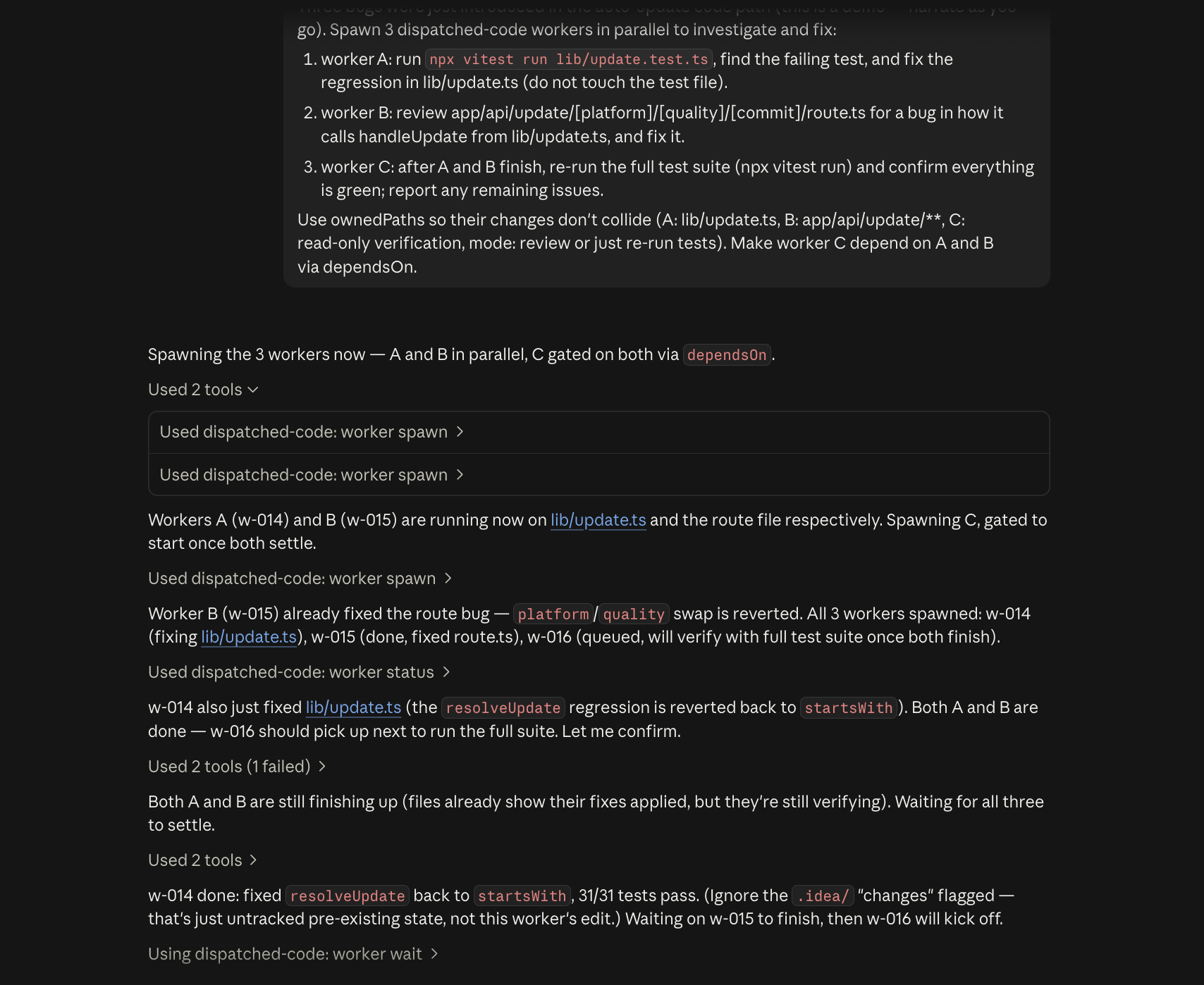
Rather than wiring subagents together over raw shell calls, which give you almost no visibility into what's actually happening. Dispatched-code runs on MCP itself. Your orchestrator calls the server, which spins up opencode workers directly inside your worktree, or wherever you point it. Each worker gets a clean ID, like w-001, w-002, and so on, and behaves like a real subagent, minus the token bill.
The dashboard is where dispatched-code really earns its keep. It runs locally on your machine and shows a live tree: your orchestrator at the top, with opencode workers branching out beneath it as they're summoned. Click into any worker to watch its activity in real time: token usage, thinking time, commands run: the same visibility you'd get from opening its session directly in the terminal, just pulled into one place. That matters more than it sounds: without it, a stalled or paused worker just quietly burns your orchestrator's tokens while you have no way to know something's wrong.
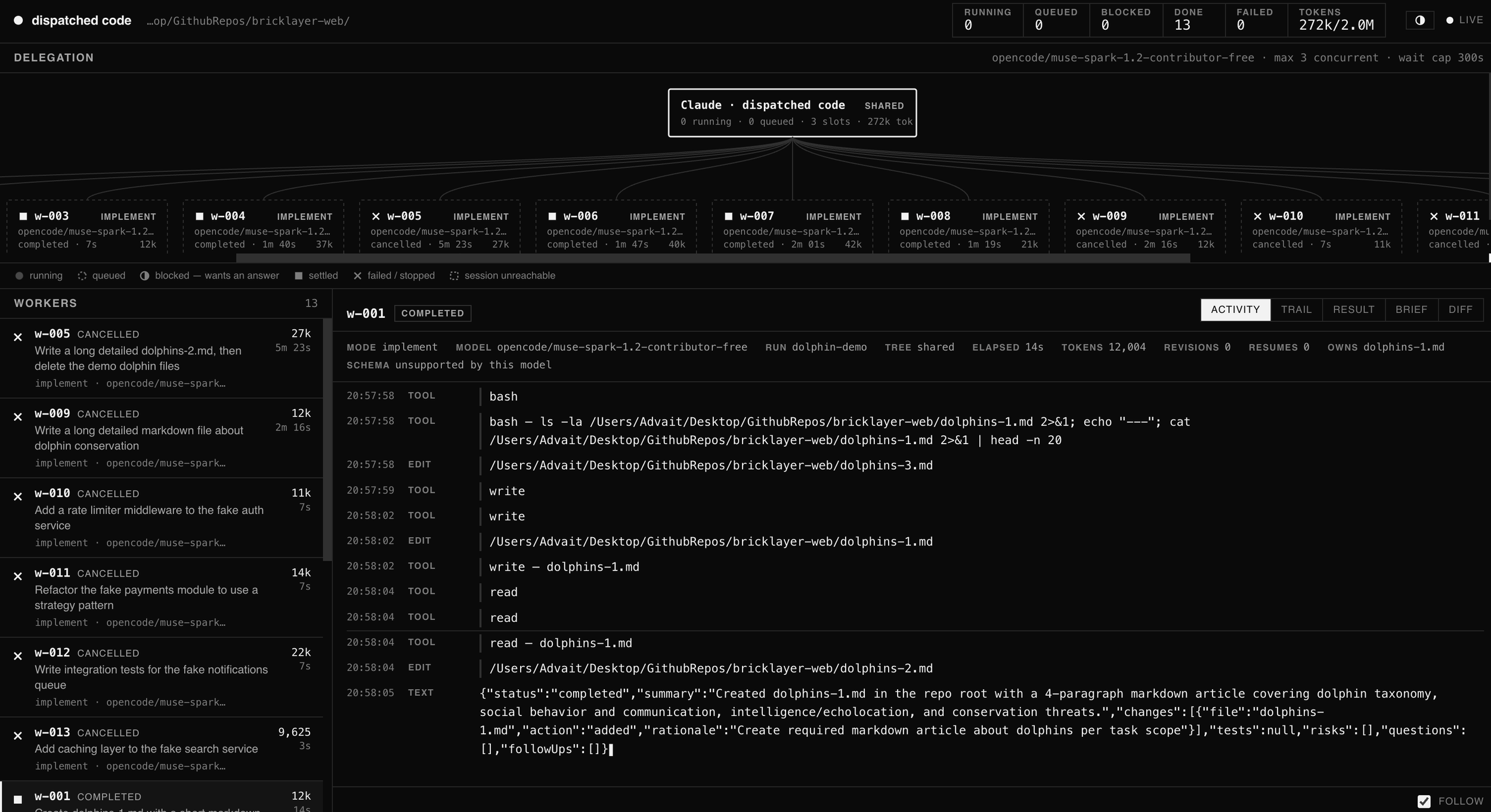
Permissions get the same treatment. Routine requests go straight to your orchestrator to approve on the fly. Anything higher-stakes like shell commands, computer use, and the like gets escalated to you on the dashboard, where you decide whether to approve or deny it. You can also jump in directly and send any worker new instructions through Claude or Codex, right from the dashboard.
After weeks of building and testing, dispatched-code is ready to try. It currently supports Claude and Codex as orchestrators, with a unified interface for more models in development. The dashboard gives you full oversight of every worker's activity and how your orchestrator routes tasks across the fleet, and support for isolated agent sandboxes is coming soon.
Try dispatched-code at dispatched-code.vercel.app
